Each year, at the end of April, we return to one of the most difficult and emotionally charged chapters in post-war Polish history: Operation “Vistula” (Akcja “Wisła”). For many, this is not simply a historical reference or a date in a textbook. It is a living memory, carried through families, preserved in silence, and passed from one generation to the next. It is a reminder of how deeply political decisions can affect ordinary lives.
In 1947, the communist authorities in Poland launched a large-scale military and administrative operation that resulted in the forced resettlement of approximately 140,000 people – primarily Ukrainians, Lemkos, and Boykos – from their ancestral lands in southeastern Poland. The official justification for the operation was to cut off support for the Ukrainian Insurgent Army (UPA). In practice, however, entire communities were uprooted regardless of individual responsibility. Civilians—families, children, the elderly—were given little time to prepare, forced to abandon their homes, and transported under military supervision to unfamiliar territories in western and northern Poland.
The resettlement was not only about relocation. It was designed to dismantle communities. People were deliberately dispersed across different regions to prevent them from preserving their cultural identity, language, and traditions. What was lost was not only property, but also a sense of belonging, continuity, and rootedness. Churches, cemeteries, and local traditions were left behind, often never to be restored.
Behind the historical facts and numbers are deeply human stories – stories of fear, loss, and resilience. Families were separated, lives were rebuilt from nothing, and entire generations grew up with a sense of displacement that could not easily be explained. For many descendants of those affected, Operation “Vistula” is not a closed chapter. It remains part of their identity, shaping how they understand both the past and the present.
This is why remembrance matters. Not as a form of accusation, and not as a political instrument, but as an act of responsibility. In 1990, the Polish Senate officially condemned Operation “Vistula,” recognizing it as a violation of fundamental human rights. This acknowledgment was an important step, but memory cannot end with formal statements. It requires ongoing reflection and a willingness to draw lessons that are relevant today.
At the Eleventh Commandment Foundation, we believe that history must inform action. The anniversary of Operation “Vistula” is not only about looking back – it is about understanding what such events mean in today’s world. As war once again forces millions of Ukrainians to leave their homes, we are confronted with realities that, while different in context, carry familiar human consequences. Displacement, uncertainty, and the loss of stability are not abstract concepts. They are lived experiences.
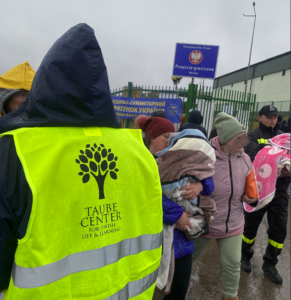
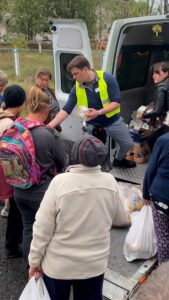
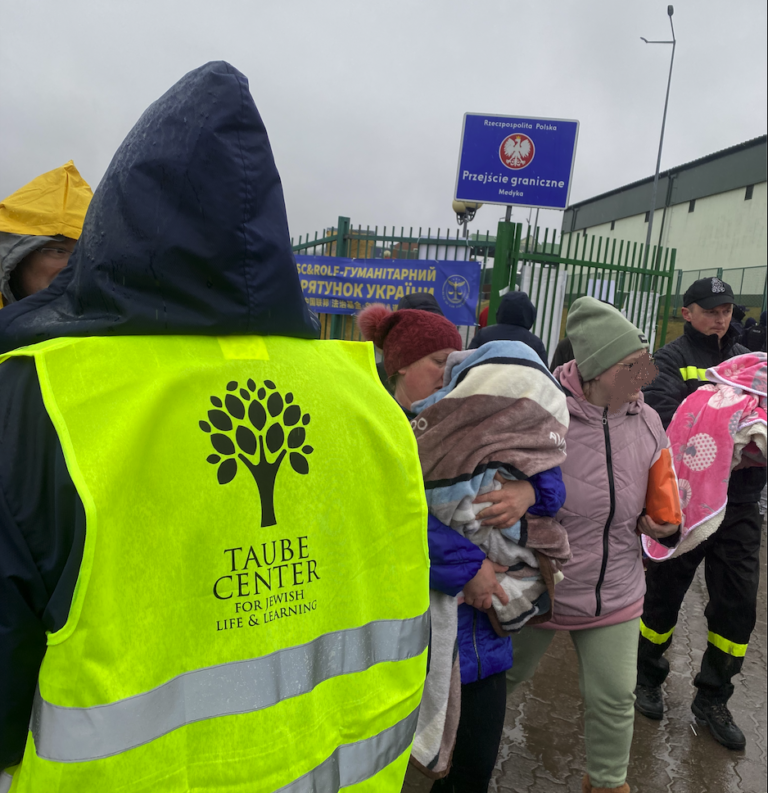
Our work in Ukraine and our support for Ukrainian refugees in Poland are guided by this awareness. We see firsthand that displacement is not merely a logistical challenge, but a deeply human one. It affects dignity, identity, and the basic sense of safety that every person deserves. Providing aid is therefore not only about meeting material needs, but also about restoring a sense of humanity and solidarity.
The memory of Operation “Vistula” reminds us that indifference has consequences. It challenges us to respond differently when faced with suffering in the present. While we cannot change what happened in 1947, we can decide how we act today, how we respond to those who are forced to leave their homes, and how we uphold the values of dignity and respect.
This anniversary is, therefore, not only about the past. It is about the choices we make now. It is about whether memory remains a passive act of remembrance, or whether it becomes an active commitment to helping others.
At our Foundation, we believe that memory carries an obligation. Not only to remember, but to act.